Auditing & Gap Analysis

Child Safe Audit Services

Measure your current level of child safe compliance and understand where your greatest risks and opportunities sit.

Child safety audits help organisations assess how their policies, procedures, systems, and day-to-day practices align with the National Principles for Child Safe Organisations and state child safety standards. They go beyond documentation to examine how consistently those expectations are understood and applied across your organisation.

Many organisations already have strong intent, training, and frameworks in place. What is often missing is a clear, evidence-based view of how those systems operate in practice, and whether they would stand up to scrutiny if tested.

Our audits are designed to give boards, executives, and leadership teams confidence that they understand their current position, while providing a practical roadmap for continuous improvement.

Our approach remains grounded in recognised audit standards. Each audit is:

  • Impact oriented, with a focus on identifying root causes and the areas that will most influence outcomes
  • Sustainable, ensuring findings are reliable and the process is respectful of organisational context
  • Evidence based, drawing on both qualitative and quantitative inputs
  • Objective, using structured methods that reduce bias
  • Insightful, surfacing risks and opportunities that are often difficult to identify internally

Derived from Auditing Risk Culture: A practical guide, IIAA, p15, 2021

For further information about our ChildSafe Audit Service, please download the brochure or submit an enquiry below.

DOWNLOAD NOWAUDIT ENQUIRY

Who Child Safe Audits Are For

Child safe audits are most valuable for organisations that work with children and want clarity around their responsibilities, risk exposure, and next steps.

This includes:

  • Early learning services and childcare providers
  • Schools and education providers
  • Sporting clubs and associations
  • Community organisations and not-for-profits
  • Local councils and government funded programs
  • Larger organisations with multiple service delivery areas
  • Organisations that are multi state and multi site

Organisations often come to audit at different stages. Some are preparing for compliance requirements while others have experienced growth, change, or increased complexity. Many simply want reassurance that what they have in place is working as intended. An audit provides a clear baseline regardless of where you are starting from.

Speak with ChildSafe Australia to understand whether an audit is the right next step for your organisation.

Child Safe Auditing

Organisations rarely begin an audit from a standing start as more often than not, there are policies, training, and good intent already in place. The challenge lies in understanding how consistently those measures are applied across different teams, programs, and environments.

Audits commonly reveal:

  • Gaps between documented policies and day to day practice
  • Unclear accountability at leadership, program, or team level
  • Strengths that are not formally recognised or measured
  • Risks that have shifted as services, staffing, or environments evolve

By bringing these patterns to the surface, audit findings provide a stronger foundation for prioritising action. They help organisations move from assumption to evidence, and from compliance thinking to practical application.

Download our auditing brochure to identify where your organisation may have hidden compliance gaps.

Three children sitting around a table.

What Your Audit Report Enables

An audit report becomes a practical tool that organisations can use to guide decision making, strengthen oversight, and support continuous improvement over time. Rather than sitting on a shelf, it is designed to be actively referenced by leadership teams as they work through priorities and plan their next steps.

In practice, the report helps organisations understand where risk sits and what should be addressed first. It provides a clear structure for board level discussions, while also offering direction for those responsible for implementing change across teams and programs. This creates alignment between governance and day to day operations, which is often where gaps begin to form.

Because the findings are prioritised and grounded in evidence, the report can be used immediately. It also supports longer term planning, giving organisations a clear pathway for strengthening their approach as their environment evolves.

Download our brochure to see how an audit report can support your organisation’s next steps.

Common Child Safety Gaps Identified

Across sectors, there are consistent areas where organisations tend to fall short.

In larger or more established organisations, policies are often well written but lack clear application. Staff may not understand how expectations apply to their specific role or cohort. In smaller or volunteer-led environments, the opposite can occur, where there may already be some good child safe practices but foundational policies and procedures are not yet fully developed.

Other common gaps include:

  • Limited onboarding and screening processes
  • Unclear reporting pathways or escalation responsibilities
  • Over reliance on individuals rather than embedded systems
  • Disconnect between leadership oversight and frontline practice
  • Assumptions that compliance has been achieved based on documentation alone

Identifying these gaps early allows organisations to take targeted action before risks escalate.

Enquire about auditing with ChildSafe Australia to uncover the specific risks within your organisation.

Two children sitting at a desk in front of text books.

“Effective prevention is predicated on creating a positive, open, and inclusive organisational culture in which the safety of children is paramount. This culture should be led by senior management and wholeheartedly endorsed and owned by staff at all levels.”

Risk profiles for institutional child sexual abuse: A literature review. Professor Keith Kaufman and Marcus Erooga , p11, 2016

How Audit Methodology is Applied

Audit methodology is informed by recognised audit and risk culture principles, though it is always adapted to the realities of child safety and service delivery. Each audit is structured to assess both compliance and effectiveness, helping build understanding around how policies are used, understood, and embedded across the organisation.

The process typically includes:

  • Reviewing documentation against the National Principles and relevant state standards
  • Engaging with leadership, staff, and where appropriate, children and young people
  • Observing how systems operate in practice across governance and service delivery
  • Identifying underlying causes rather than surface level issues

This approach ensures findings are practical, defensible, and relevant for decision making at both operational and board level.

Contact ChildSafe Australia to learn how our audit methodology can be applied to your organisation.

Desktop audit

A desktop audit can be the first step to a stronger site implementation audit.
  • The audit is conducted remotely
  • Your organisation’s document, policies, procedures will be checked against the 10 National Principles
  • Your organisation will receive a comprehensive ChildSafe audit report generally including:

    • Executive summary
    • Summary of findings
    • Recommendations arising from audit
    • Detailed assessment tables as a detailed multi-indicator assessment against each of the criteria in the ChildSafe Standards
    • Outline of method and scope of the report
    • Assessment criteria and limitations
    • Summary of documented child safety management data
DOWNLOAD NOWAUDIT ENQUIRY
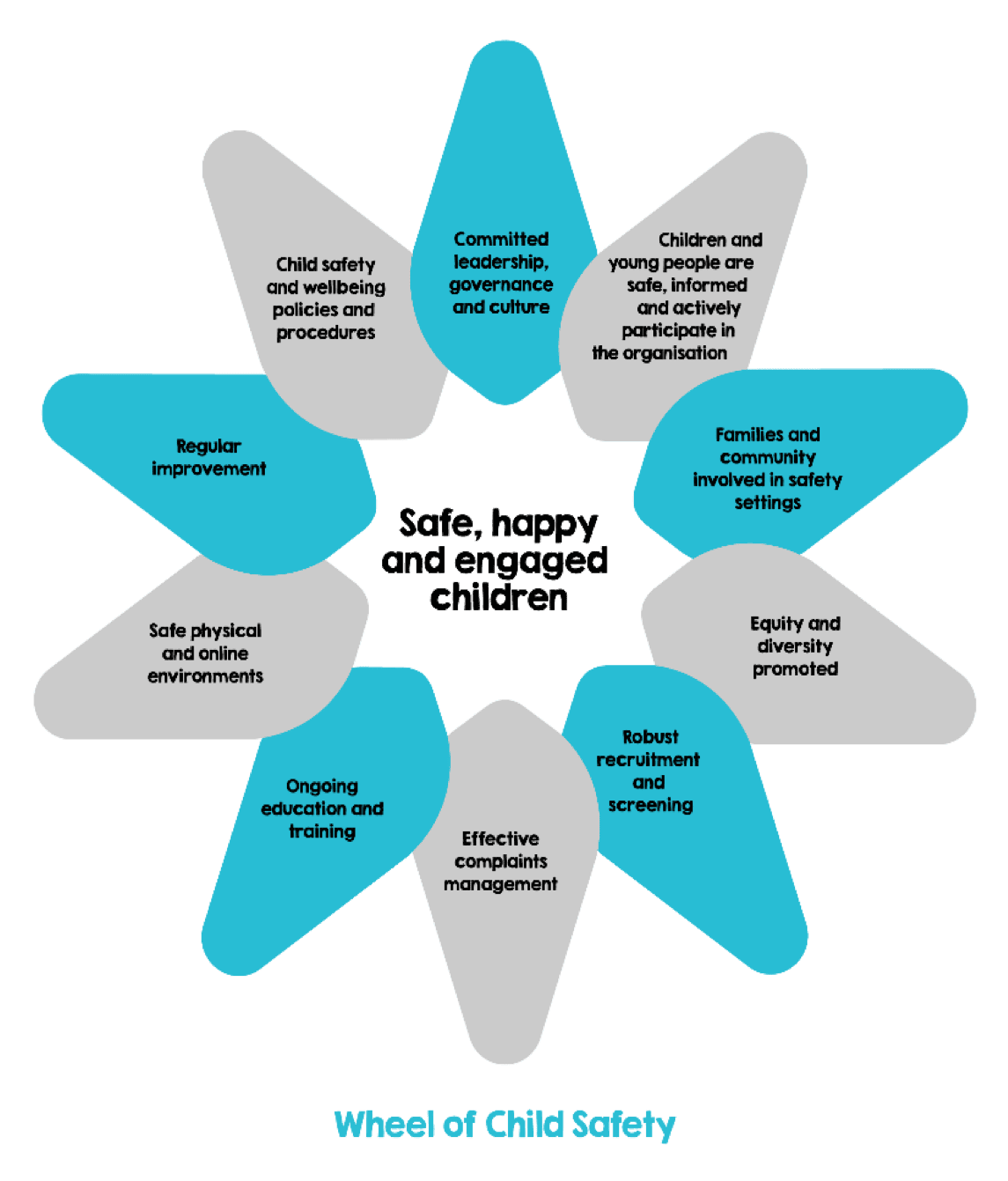
The wheel of child safety.

The desktop audit provided by ChildSafe helped frame our continuous improvement in the context of the 2017 Royal Commission Report and Standards. It provided additional clarity around organisational compliance and best practice industry standards.

Kids Hope Australia
Three children working on a laptop.

Implementation audit

The site audit is a stronger audit making it possible to validate and analyse both documented and onsite implementation compliance indicators and the opportunity to discuss issues and practice with the practitioners of child safety.

A member of the audit team will visit the designated site/s of the organisation to talk to the leaders, safety coordinators, and children (with permission), about the implementation of child safety. As well as gaining information about how the organisation does things, the visit provides valuable insight into how people in the organisation think about the safety and care of children.

A ChildSafe audit report will generally include the following:

  • An executive summary
  • Summary of findings
  • Recommendations arising from audit observations, for your organisation to improve implementation in the identified area
  • Summary of interviews
  • Detailed assessment tables as a detailed multi-indicator assessment against each of the criteria in the Child Safe Standards
  • Outline of method and scope of the report
  • Assessment criteria and limitations
  • Summary of documented child safety management data
DOWNLOAD NOWAUDIT ENQUIRY
Three children sitting around a table.

Independent and Client Focused Reporting

Audits are conducted independently and reported exclusively to the client organisation. Findings are not shared externally and are not used for regulatory reporting or enforcement purposes.

This independence supports open engagement with the process. Organisations are able to reflect honestly on their current position and focus on improvement without concern about reputational impact.

Reports are structured to support boards, executives, and leadership teams in understanding both risk and opportunity, while providing clear direction for next steps.

Children sitting around a table

We were very pleased with the audit of our approach to child safety management. We found the report to be very comprehensive and extremely accurate. It has provided us with a good way forward, and more importantly, with the opportunity to improve our approach and support us in providing a safe environment for all children.

A group of Child Care Centres , Tasmania